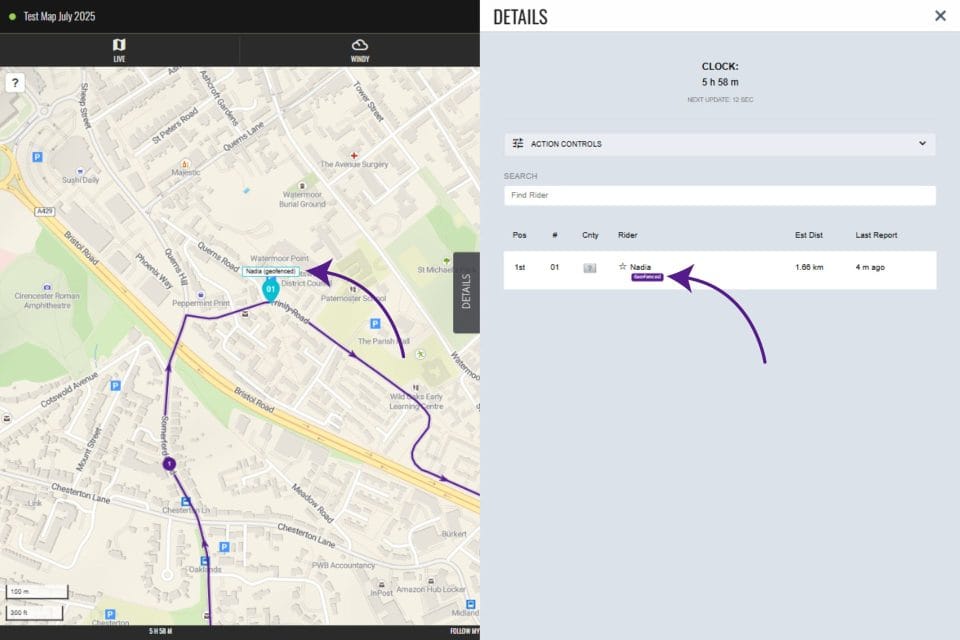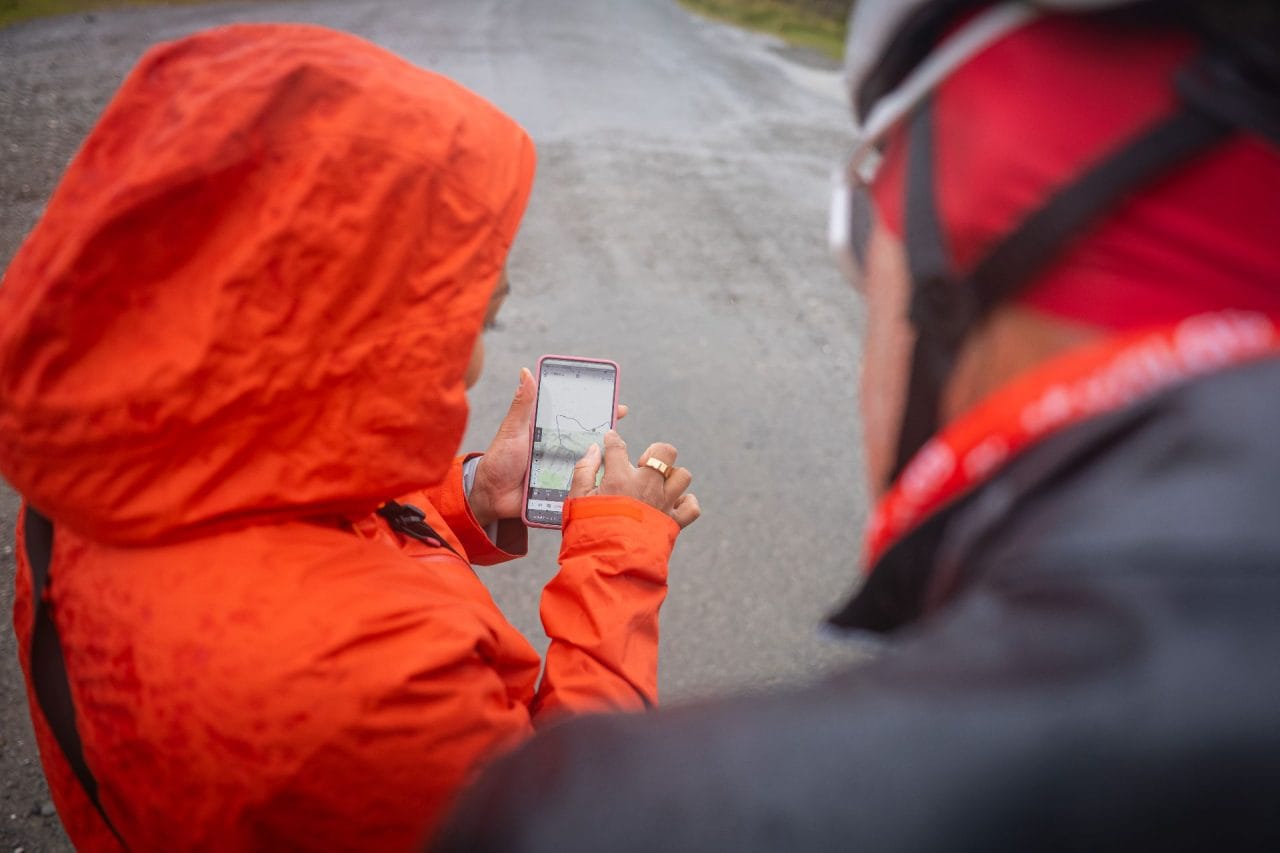

Even amongst experienced dotwatchers, there is often some confusion about how different event formats rank their participants. Outside of tradition mass-start, fixed-route events, perceived position on the road can be totally at odds with a participant’s leaderboard ranking.
There is, of course, method to this madness and each ranking method follows a simple set of rules. Below are all the ranking methods currently used by events on our platform.
Distance on Track
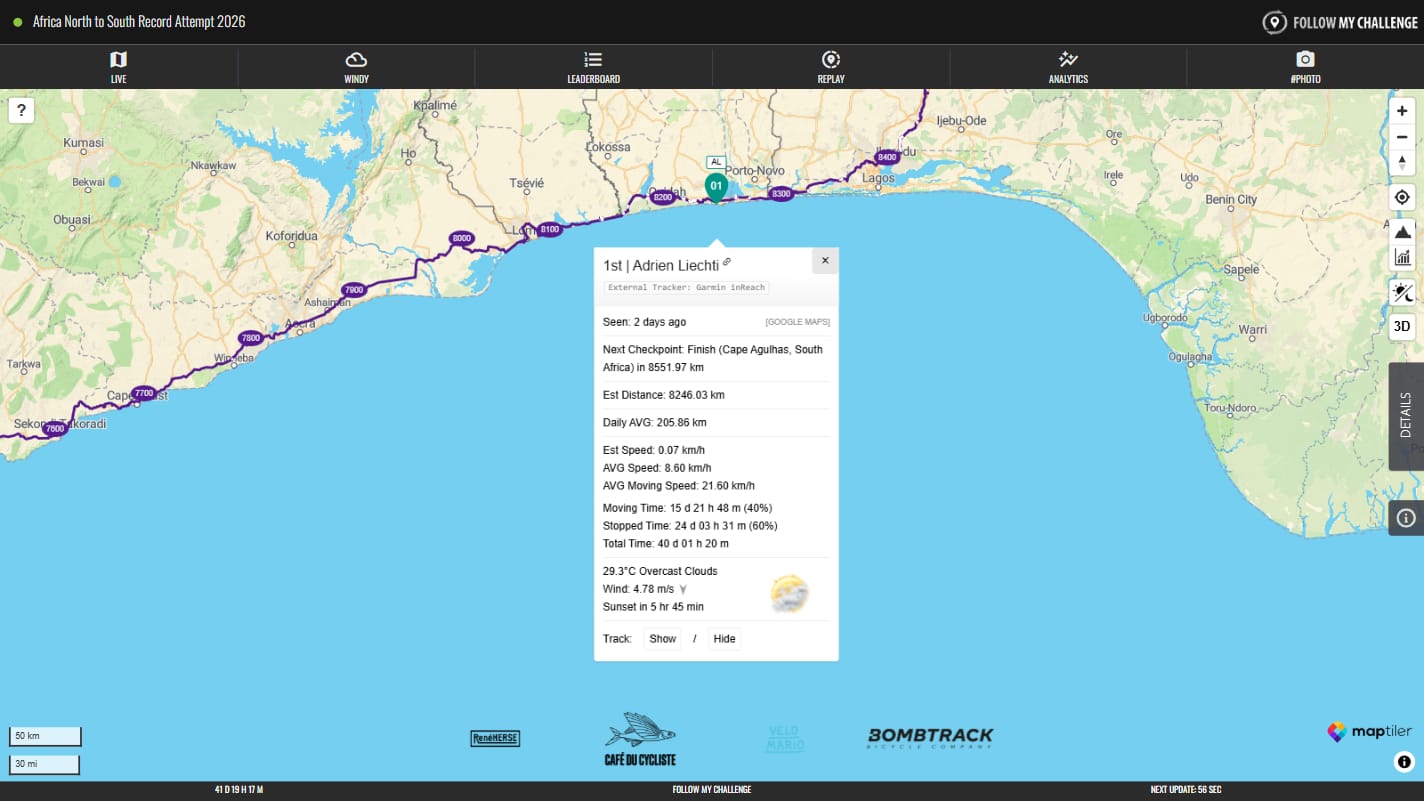
The easiest and most common method to rank participants is simply their progress along a pre-loaded track. For mass-start, fixed-route events, this is the default method of ranking. It also the most intuitive, as each participant’s physical position directly correlates with their ranking.
Example events: Badlands, Seven Serpents, GranGuanche Audax
Checkpoint Timestamps
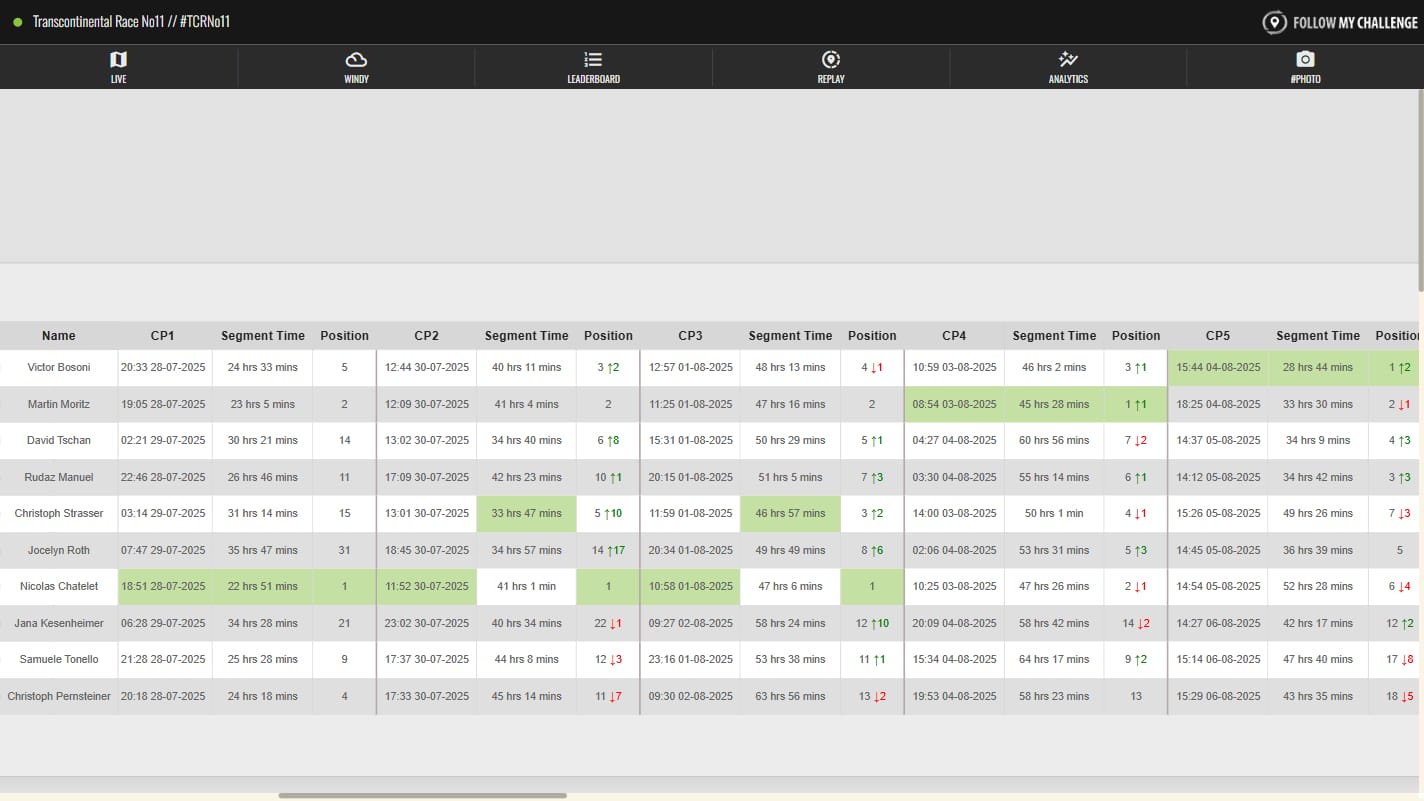
Relatively common but often misunderstood, this format is often employed by free-route races to rank participants. It means that a participant’s position only changes at each checkpoint, where they are ranked by the time they arrived, with the first participant to arrive ranked first.
This process continues at subsequent checkpoints, meaning the ranking only updates at intervals, with large jumps in position relatively common. It also means that perceived position on the road often doesn’t match up with the leaderboard ranking, especially if one participant chooses to sleep at a checkpoint and others press on.
Because this ranking method is less intuitive, dotwatchers often ask why distance isn’t used instead. But the reality is that a greater distance in a free route event may just mean poor route choices or mistakes, so it can be misleading. The complexity and unpredictability of free-route events mean that fixed checkpoints are the only places where direct comparisons can be drawn; hence this is the only place where rankings can update.
A small number of events use staggered starts combined with the checkpoint ranking. In this instance, elapsed time is used at each checkpoint rather than the timestamp, ensuring the ranking takes into account the staggered start.
Example events: The Transcontinental, Transiberica, The Unknown Race
Checkpoint Count
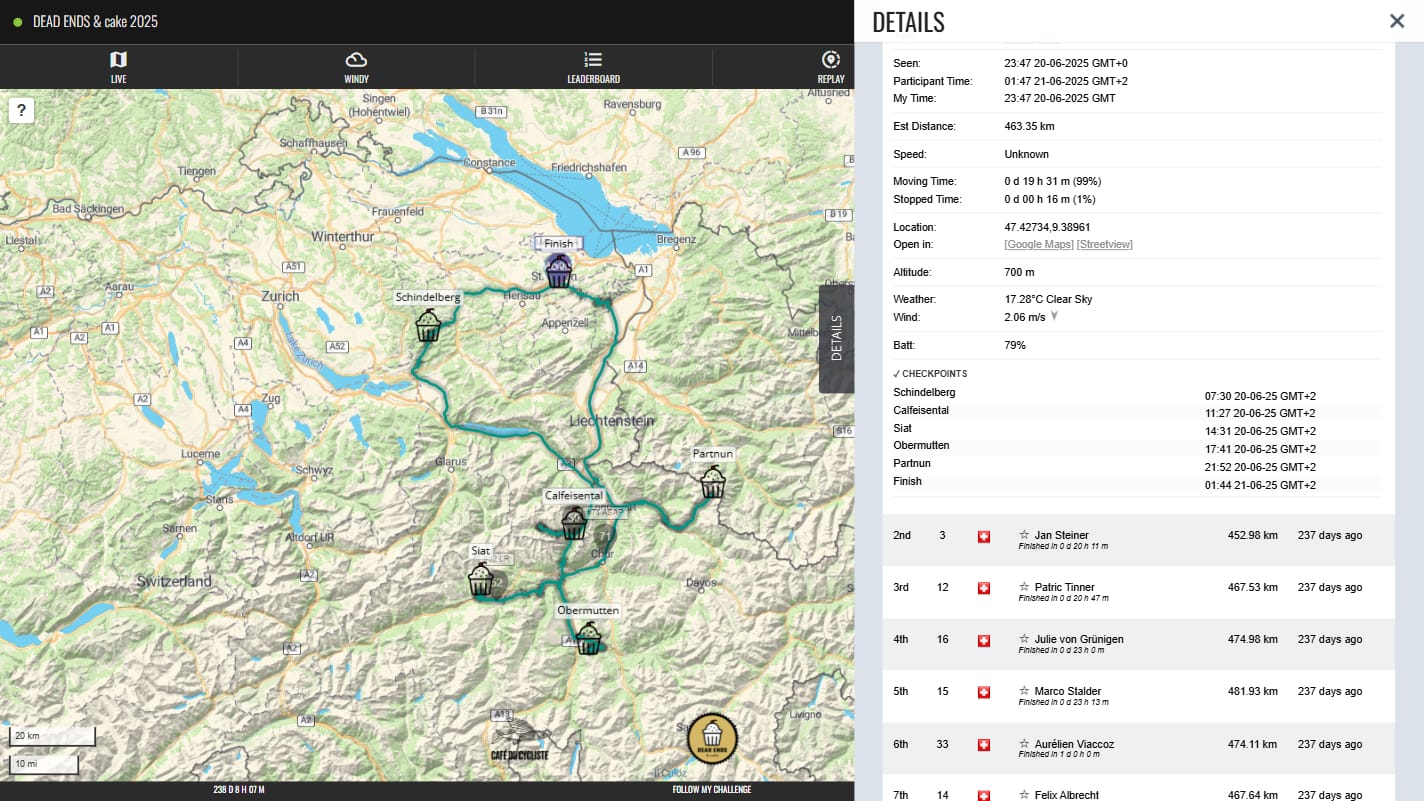
Less common, this ranking method is very similar to the above. The only difference is that checkpoints can visited in any order. Ranking is determined by the number of checkpoints visited, with the timestamp at the most recent checkpoint being used to rank those participants on the same number of checkpoints.
As with the checkpoint timestamp ranking, this ranking method often sees large jumps in position and only updates when participants arrive at a new checkpoint. Unlike fixed-order checkpoint events, however, the visual mismatch is usually less apparent, given participants may be tackling checkpoints in completely different orders.
Example events: DEAD ENDS & Cake, DEAD ENDS & Dolci, All Points North
Average Speed
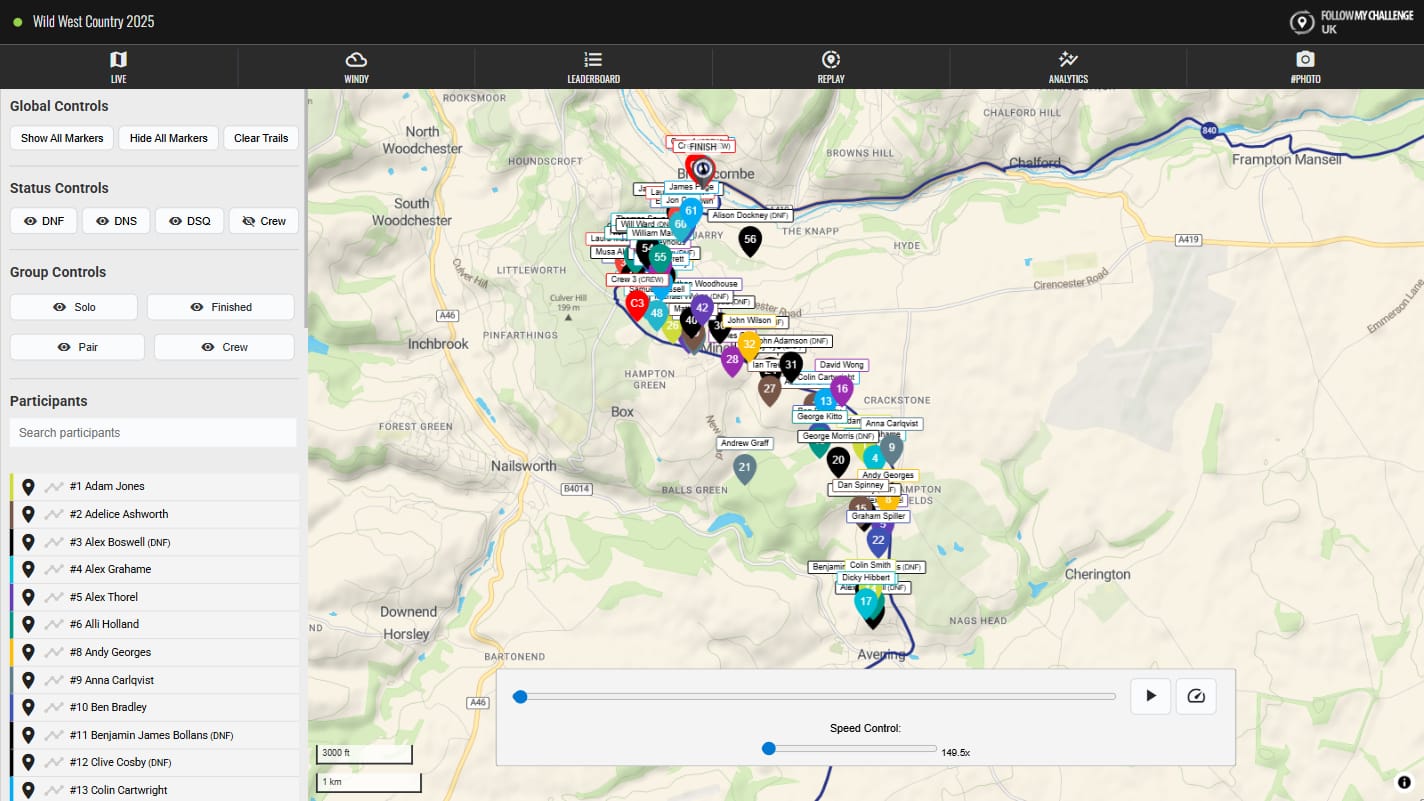
Often fixed-route events start participants at intervals, with these start delays pre-loaded into the map manager. In this instance, ranking by average speed takes these differing start times into account and provides a more accurate ranking than distance on track.
This method uses participants’ overall average speed (rather than moving average), effectively predicting where they would finish if everyone maintained their average speed throughout. It means that there is often some mismatch – especially early on – between physical positions and rankings.
Once participants finish, ranking reverts to elapsed time, which is effectively identical. It simply highlights the time taken rather than the average speed, since this becomes more relevant.
Example events: Taunus Bikepacking, Wild West Country, Race Across Austria
Stage Time
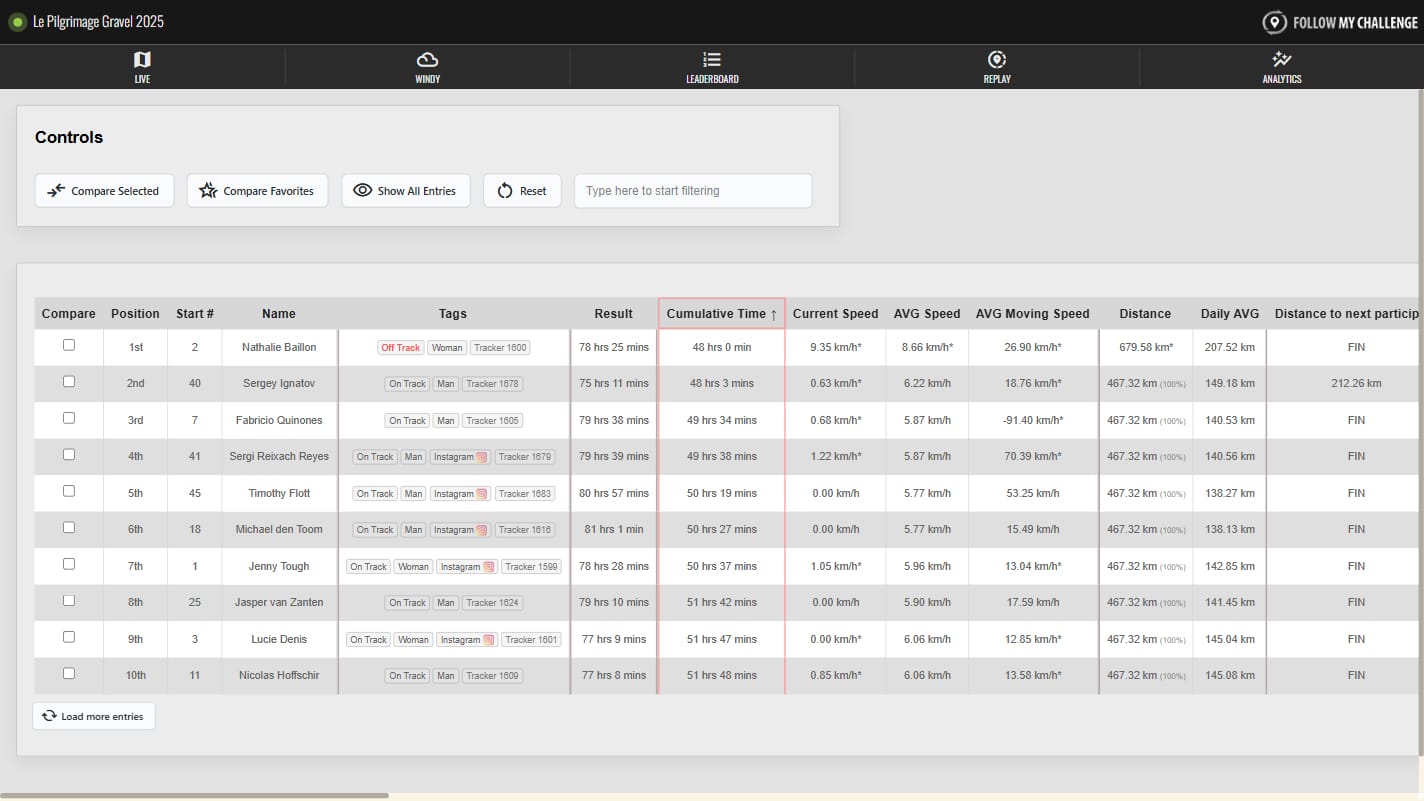
Stage time ranking is rarely used and requires careful configuration to ensure it works correctly. This is designed for stage races, where only the time between start and finish points of each stage should count towards the ranking. Participants are therefore ranked by cumulative elapsed time over the stages.
Again, this means that rankings may not match up with physical positions after the first stage.
Example events: GBDURO (up to 2023), Inferno Series, Le Pilgrimage Gravel
Points
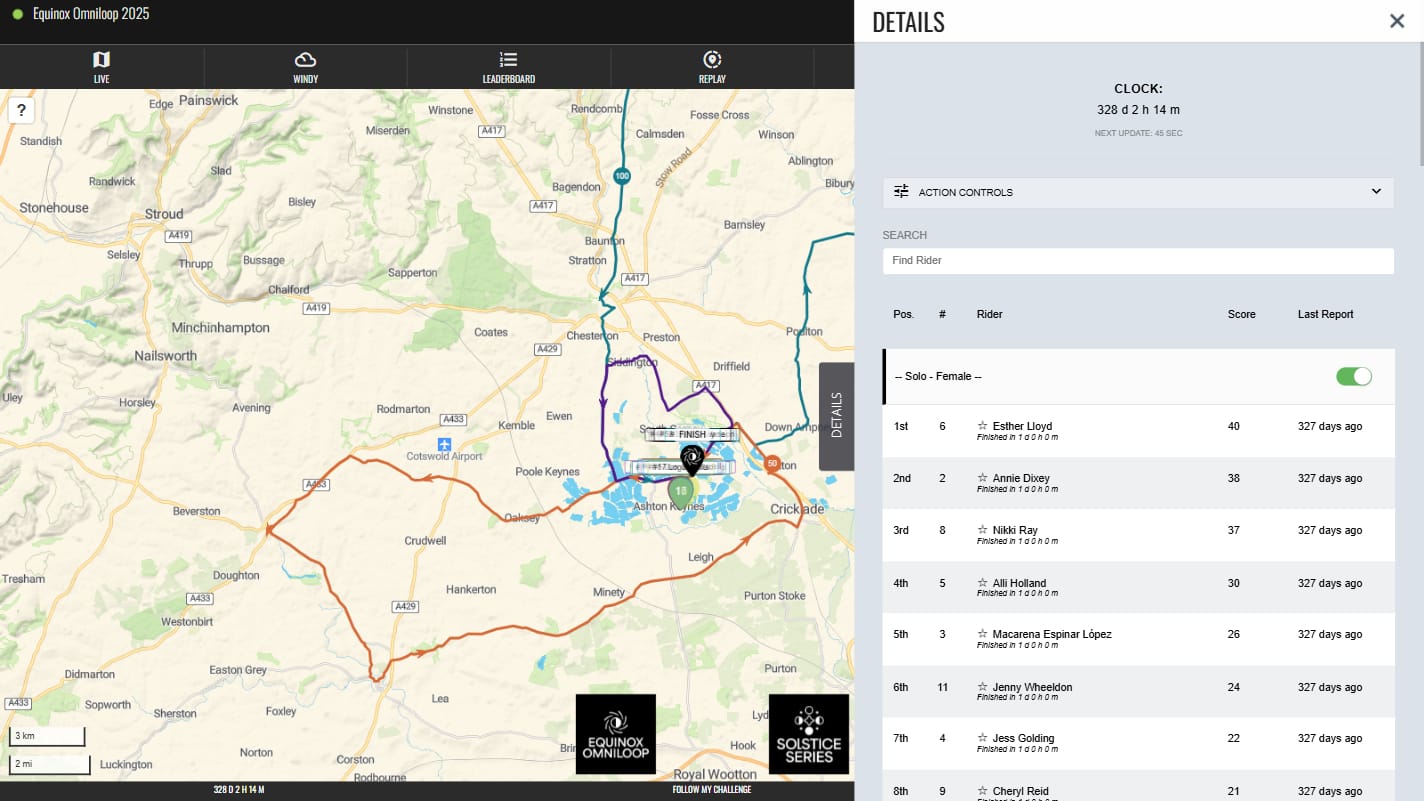
Sometimes used by cycling events with more creative formats or by adventure races, this is a relatively uncommon ranking method.
Participants are assigned points based on reaching certain checkpoints, often with different checkpoints having different values. In this situation, a score is shown on the leaderboard and positions will be assigned based on this.
Example event: Equinox Omniloop